Business Growth • Technology • Distribution • Leadership
Helping Companies Launch, Build and Grow Across Canada

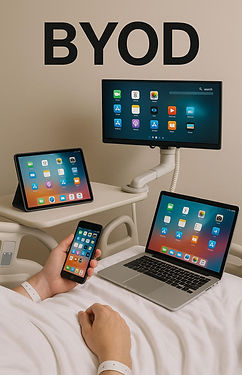
Transform the patient experience with the solution (BYOD) Bring your own device
A new generation of bedside entertainment and communication... without the costs of traditional equipment.
Designed for hospitals and healthcare facilities across Canada, our platform allows patients, visitors and staff to instantly access digital services directly from their smartphone, tablet or laptop.
✅ No expensive bedside equipment
✅ No articulated arms
✅ No complex infrastructure
✅ A modern, secure and cost-effective solution
Why choose BYOD?
✔ Significant reduction in operating and maintenance costs
✔ Rapid deployment with minimal investment
✔ High-performance IPTV streaming optimized for modern Wi-Fi networks
✔ Live TV, educational content, digital communications and services on patients' personal devices
✔ More space, fewer barriers, and a safer environment for patients and staff
Developed and supported in Montreal, our solution offers local support, turnkey deployment and customized developments according to the needs of your institution.
Less equipment. Less maintenance. Less cost. More flexibility. More security. More patient satisfaction.
📩 Contact us for a personalized demo and learn how our BYOD solution can accelerate your institution's digital transformation.
Canadian innovation for Canadian hospitals. 🇨🇦